
A Guide to Donation, Recycling & Disposal of Household Stuff in San Francisco
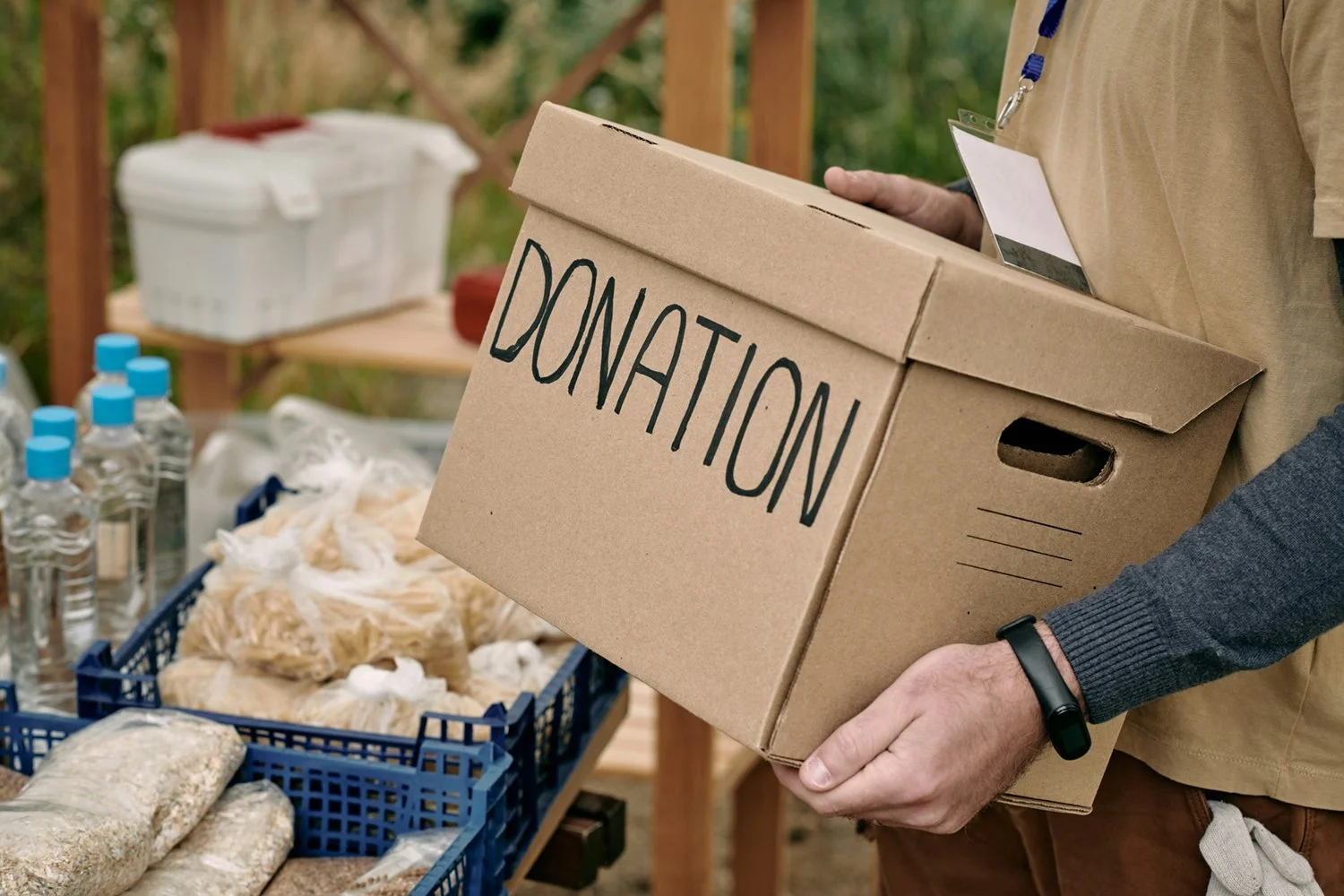
Whether you’re preparing to sell your home, moving to a smaller space, renovating, or simply trying to reclaim an overstuffed garage, basement, or closet, eventually you have to figure out what to do with all the stuff you no longer want.
The good news is that in San Francisco, “throw it away” is rarely your only option. Furniture, clothing, books, building materials, art supplies, electronics and even some seemingly difficult-to-dispose-of household items can often be donated, reused, recycled or picked up.
The trick is figuring out where each item belongs.
Here’s a guide to some of the best San Francisco resources for clearing out a home while keeping as much as possible out of the landfill.
Start With SFRecycles
If you’re not sure what to do with something, San Francisco’s SFRecycles database is an excellent place to start. The San Francisco Environment Department maintains the resource to help residents find reuse, recycling and disposal options for specific items.
Because acceptance policies and hours can change, it’s always worth checking before loading up the car.
Think of SFRecycles as the city’s “what do I do with this?” tool.
Recology’s Free Bulky Item Pickup
If you have large items that aren't suitable for donation—or simply can't be transported easily—Recology’s Bulky Item Collection is one of the most useful services available to San Francisco residents.
Residential customers receive two curbside bulky-item collections per calendar year at no additional charge. Each appointment can accommodate up to 10 items, and depending on the circumstances, the two annual collections can be combined.
Accepted items include many types of:
Furniture
Appliances
Mattresses
Electronics
Garage items
Scrap metal
Residential washers and dryers
Refrigerators and stoves
The important distinction is that this is a disposal/recycling service—not a general garbage pickup. Hazardous waste, construction and demolition debris, auto parts and tires are among the items that aren't accepted through the program.
Tip: If you're preparing a house for sale, don't automatically put usable furniture at the curb. Recology itself recommends considering donation or reuse first.
Household Hazardous Waste: Don't Put It in the Bin
Paint, pesticides, household chemicals, batteries, fluorescent bulbs and other hazardous materials require special handling. They should not go into your black, blue or green bins.
San Francisco residents have several options.
Recology operates a Household Hazardous Waste Facility at 501 Tunnel Avenue, where residents can drop off qualifying household hazardous waste for free. The facility is open Thursday through Saturday, 8 a.m. to 4 p.m., and proof of San Francisco residency is required. There is a limit of 15 gallons or 125 pounds per trip, with additional restrictions on containers and certain materials.
There is also a free residential pickup service for household hazardous waste. Recology asks residents to provide information about the materials, and you must be home when the pickup occurs.
Common household hazardous materials include:
Paint and paint-related products
Household batteries
Fluorescent and LED bulbs
Pesticides
Household cleaners
Aerosol cans
Motor oil and filters
Some propane and butane cylinders
Certain electronics and universal waste
San Francisco household hazardous waste information
Community Thrift: Furniture, Clothing, Housewares & More
Community Thrift at 623 Valencia Street is one of San Francisco's particularly useful options when you have good-quality household goods that someone else could use.
The nonprofit accepts a wide range of donations, including clothing, shoes, jewelry, furniture, housewares, electronics, books, art and collectibles. Donors can also designate one of more than 200 nonprofit charity partners to benefit from the proceeds of their donations.
Community Thrift also offers free furniture pickup within San Francisco by appointment, generally Sunday through Thursday. There are some requirements: they typically want at least two large pieces, and furniture needs to be reasonably accessible.
One important caveat: Don't assume that a thrift store will take everything. Community Thrift, for example, doesn't accept mattresses, bed frames, major appliances, hazardous materials, damaged furniture and a number of other categories.
SCRAP: Give Your Craft Supplies a Second Life
Have a box full of fabric scraps, art supplies, sewing notions, paper, markers or other creative materials? Don't throw it out.
SCRAP—the Scroungers' Center for Reusable Art Parts—is a nonprofit dedicated to diverting reusable creative materials from the waste stream and putting them back into the hands of artists, educators and makers.
SCRAP currently accepts donations at its location at 141 Industrial Street. Small donations of up to two boxes or bags can be dropped off without an appointment during donation hours; larger donations require an appointment. Pickup is also available for qualifying donations for a fee.
The organization emphasizes that its accepted materials change based on inventory and demand, so check its current guidelines before showing up.
Building Resources: Don't Throw Away That Old Door
If you're remodeling—or simply replacing architectural elements in an older San Francisco house—before sending materials to the dump, check with Building Resources of San Francisco at 701 Amador Street.
Building Resources accepts reusable building materials, including things such as:
Doors
Windows
Cabinets
Lumber
Architectural elements
Vintage fixtures
Stained glass
Other reusable construction materials
The organization notes that much of its inventory comes from homeowners deconstructing or remodeling their houses. Used building materials can have considerable value, particularly when they have character that's difficult to reproduce with new products.
Donations are currently accepted seven days a week, 9 a.m. to 3 p.m.
Friends of the San Francisco Public Library: Books & Media
A house cleanout can produce an astonishing number of books.
Rather than filling the recycling bin with them, consider donating them to Friends of the San Francisco Public Library, located at 1630 17th Street.
Friends accepts donated books and media and resells them through its bookstores and book sales to raise money for the San Francisco Public Library and community programs. The organization says it receives nearly one million donated books each year and diverts hundreds of tons of books from the landfill.
Book and media donations are currently by appointment only, with appointments limited to 20 boxes or 30 bags. Exceptionally large collections, such as estate or library cleanouts, can be arranged separately.
Goodwill and Salvation Army
Two familiar national organizations remain useful options for San Francisco residents.
Goodwill accepts a variety of donated goods, including clothing, furniture, appliances and electronics, although individual locations and current acceptance policies vary.
Salvation Army accepts clothing, furniture, appliances and household goods at participating locations. San Francisco Environment specifically lists the organization's local donation centers among its reuse resources.
For furniture, check with the individual location before making a trip. For example, the Salvation Army's Valencia Street location currently lists furniture donations but excludes office furniture, beds and armoires.
Give It Away Directly: Freecycle, Craigslist & Other Online Options
Sometimes the best destination for an unwanted item isn't a nonprofit at all—it's your neighbor.
San Francisco Environment recommends several online resources for giving usable items a second life, including Freecycle, Craigslist and Facebook’s Buy Nothing group.
This can be particularly effective for items that are useful but aren't necessarily worth a trip to a donation center:
Moving boxes
Shelving
Planters
Small appliances
Home improvement leftovers
Kitchenware
Furniture
Garden supplies
If you're selling your home, this can also be a quick way to clear out the last few odds and ends after you've finished staging.
9. Don't Forget Food
Cleaning out a pantry can turn up a surprising amount of perfectly good food.
The San Francisco-Marin Food Bank accepts unopened, unexpired food in its original packaging, as well as whole fresh produce.
If you're preparing for a move or cleaning out a relative's home, consider donating usable food rather than throwing it away.
A Simple Rule for Clearing Out a Home
When you're faced with a room full of stuff, it helps to think about disposal in this order:
1. Can someone use it?
Donate it, give it away, or sell it.
2. Can it be reused in another form?
Look at organizations such as SCRAP or Building Resources.
3. Can it be recycled?
Use SFRecycles to find the appropriate location.
4. Is it hazardous?
Keep it out of the regular bins and use San Francisco's household hazardous waste program.
5. Is it genuinely unusable?
That's when Recology's bulky-item collection or other disposal options come into play.
The goal isn't to make getting rid of things complicated. It's actually the opposite: figure out what you have first, then send each item to the simplest appropriate destination.
For homeowners preparing to sell, this can make a particularly big difference. A house that's been lived in for years can accumulate an extraordinary amount of furniture, clothing, books, tools and miscellaneous household goods. Dealing with those items before putting the house on the market can make the home feel larger, cleaner and easier for buyers to envision as their own.
And with San Francisco's many reuse and donation programs, much of what you no longer need can find a second life instead of ending up in a landfill.
More Resources
The San Francisco Environment Department maintains a comprehensive guide to donating unwanted items, including Goodwill, Salvation Army, Building Resources, SCRAP, Freecycle, Craigslist and other resources.
San Francisco Environment: Where to Donate Unwanted Items
For a more detailed search by item, start with:
Donation policies, hours and pickup availability can change, so check with the organization before making a trip or scheduling a pickup.
This article was created with AI assistance but reviewed by a human.