
What Makes a Bedroom a Bedroom? Myths vs. Facts
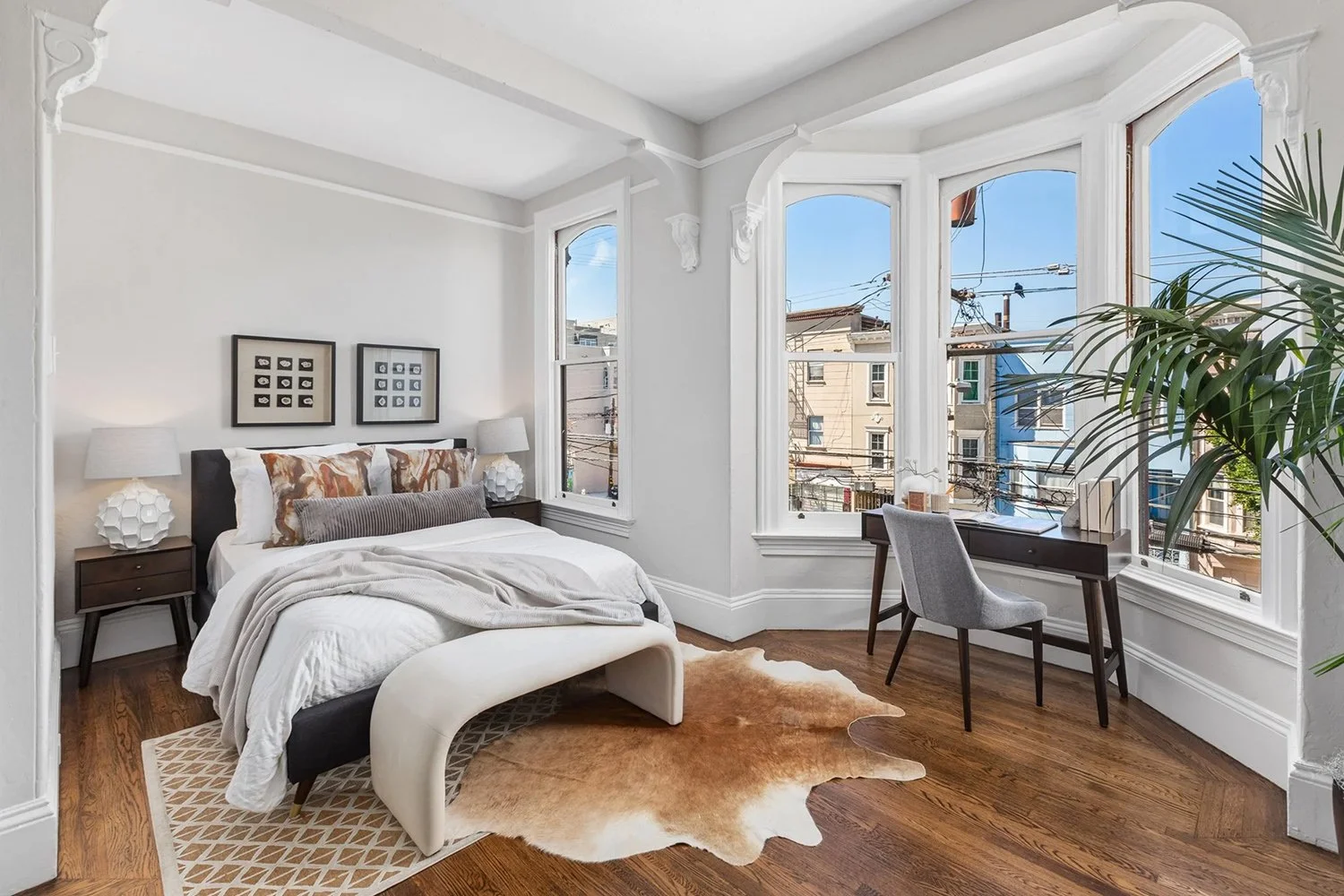
Closet? Check. Window? Check. Room for a bed? Check.
Congratulations—you have a bedroom. Right?
Not necessarily.
In Northern California, where homes routinely include converted garages, quirky Victorian floor plans, interior rooms and spaces that have been used for everything from offices to bedrooms to storage, the question of what actually counts as a bedroom comes up a lot.
And there are plenty of opinions about it. Some are based on the building code. Others are based on real-estate convention. And some seem to have been passed down from one open house to the next.
So let's clear up a few of the most common myths.
Myth #1: Every bedroom needs a closet.
Nope.
A closet is nice. A closet is useful. A closet filled with shoes is even better.
But a closet isn't what makes a room a bedroom under the building code.
This is an especially important distinction in San Francisco, where older homes weren't necessarily designed around today's expectations of walk-in closets and custom storage. A bedroom with an armoire instead of a built-in closet isn't automatically disqualified from bedroom status.
The takeaway: Lack of a closet doesn't necessarily make a bedroom something else.
Myth #2: If there's a window, it's a bedroom.
If only it were that easy.
A sleeping room generally needs an appropriate way for someone to escape in an emergency. In many cases, that means a window or exterior door that meets specific requirements for emergency escape and rescue.
And this is where the little basement window that barely opens can become a problem.
It's not enough to say, “Technically, there's a window.” The opening has to meet requirements for things like size, accessibility and how high it is above the floor.
The takeaway: A window can be important—but what kind of window matters.
Myth #3: A bedroom has to be at least 120 square feet.
This one gets repeated a lot.
You may have heard that the first bedroom in a home has to be 120 square feet and additional bedrooms have to be at least 70 square feet. That's an oversimplification of the rules and shouldn't be treated as a universal San Francisco bedroom test.
Room-size requirements can depend on the building, when it was built or altered, and which code provisions apply.
So don't assume that a 68-square-foot room automatically isn't a bedroom. And don't assume that a 125-square-foot room automatically is one, either.
The takeaway: Square footage matters, but it isn't the whole story.
Myth #4: Every bedroom needs a seven-foot-six-inch ceiling.
This is where things get a little more city-specific.
Ceiling height is one of those details that tends to come up when you're dealing with attic bedrooms, converted spaces or homes with sloped ceilings—which, conveniently, describes quite a few interesting houses in both San Francisco and Sacramento.
In San Francisco, the local Housing Code specifically says that habitable rooms generally need a ceiling height of at least 7 feet 6 inches, unless they were legally constructed under different provisions. The code also has specific rules for rooms with sloping or unusual ceilings.
Sacramento follows the California Residential Code, with local amendments, so the analysis is a little different. Rather than relying on the old real-estate shorthand that “a bedroom needs a 7½-foot ceiling,” the applicable code requirements depend on the type of space and how it was constructed or altered. Sacramento's current residential code materials also make clear that existing buildings and alterations can be treated differently from new construction.
In either city, an attic room with a charmingly low ceiling isn't automatically a bedroom—or automatically not a bedroom.
The takeaway: Don't measure the ceiling at the lowest point and call it a day. Sloped ceilings, older construction and the history of the space can all matter.
And yes, this is another good reason why “But it's been my kid's bedroom for 15 years!” isn't quite the same thing as a building-code determination.
Myth #5: Every bedroom needs two doors.
Not exactly.
There's an important distinction between a building's normal means of getting out and an emergency escape opening.
In a typical home, you might walk through the bedroom door into the hallway to leave the house, while a properly sized window provides an emergency escape route.
That's different from saying you need two doors.
The takeaway: One door plus a qualifying emergency escape opening can be perfectly normal.
Myth #6: You can tell if it's a bedroom just by looking at it.
This may be the biggest San Francisco myth of all.
Walk into a room and it certainly feels like a bedroom. It has four walls, a door, a bed and maybe even a cute little nightstand.
But the history of the property matters.
Was the room originally built as a bedroom? Was it added later? Was an alteration permitted? Does the property's documentation support the way the space is being represented?
San Francisco has a lot of homes with decades of additions, alterations and creative adaptations. A room may have been called a bedroom for years without necessarily meeting every requirement that applies to a newly created bedroom today.
And the reverse can also be true: a perfectly useful sleeping space may not neatly fit the definition a buyer has in mind.
So... What Does Make a Bedroom?
Unfortunately, there isn't one magic checklist.
The applicable rules can involve things like room dimensions, ceiling height, light and ventilation, and emergency escape and rescue, along with the history and permitted status of the space.
And that's why the question sometimes requires a little more digging than measuring the room and looking for a closet.
For buyers, that might mean asking about permits or property records when a bedroom seems questionable.
For sellers, it means being thoughtful about how a room is described rather than assuming that because everyone in the family has called it “the third bedroom” for 20 years, that's necessarily how it should appear in a listing.
San Francisco homes are wonderfully weird. That's part of what makes them interesting—and sometimes makes them a little tricky.
A bedroom doesn't necessarily need a closet. A window isn't automatically enough. And there isn't a single square-footage number that answers every bedroom question.
When you're evaluating a home, look beyond the room itself. The property's permits, history and applicable building requirements can be just as important as what's currently sitting inside those four walls.
And if you're wondering whether that sunny little office, basement room or former nursery really counts as a bedroom?
That's a good question to ask before you put it in the MLS—not after.
Building codes and property requirements can vary depending on the age, construction and alteration history of a home. When in doubt, it's worth checking the property's records and consulting the appropriate building or real-estate professionals.
This story was written with AI assistance but edited by a human.